
One of the biggest fears Hinge users face is accidentally getting close to a catfish – and trust me, many fall for their traps. Catfish aren’t just an MTV thing…they’re real and thriving on Hinge.
Upload their photo to ProFaceFinder and instantly see where else it appears online—dating apps, social media, even scam sites.
Once you know what to look for, however, it’s pretty easy to tell if you’re talking to a fake person on Hinge. These are the signs:
| Catfish Sign | What It Looks Like on Hinge |
| “New” profile | Empty prompts or missing details even if verified |
| Weird photos | Wrong identities, AI images, or low-quality photos |
| Nonsensical prompts | Generic, irrational, bot-like replies or emoji spam |
| Pushy after matching | Love-bombing → pressure for requests |
| Money-focused | Crypto pitches, sob stories, fake emergencies, etc. |
| Inconsistencies | Refuses to meet, gives excuses, details don’t line up |
1. Their Hinge Profile Is Incomplete & “New”, Even if Verified

Hinge catfishes typically have little content on their profile. No photos, empty prompts, and missing personal data.
From what I’ve noticed, this usually shows up as incompleteness, which is a sign of bots or lazy catfishes.
Catfishes usually fill out only some basic details (Vitals) – they tend to leave out nuanced Virtues and Vices, like smoking habits and political beliefs.
Watch out for the “New” badge. A lot of fake profiles have it constantly because they’re stuck in a cycle of getting reported, banned, and making new accounts.
Remember: Some Hinge catfishes may be verified through deepfakes, AI-generated selfies, or other deceptive methods.
2. Reverse Face Search Their Selfies, Results Don’t Match
Upload their photo to ProFaceFinder and instantly see where else it appears online—dating apps, social media, even scam sites.
Always reverse image search Hinge users’ photos because they like to steal them. I categorize the images into 2 groups:
1. The seemingly perfect pictures
Catfishes steal attractive people’s images to make people fall faster: professional shots, micro celebrities, or “flawless” pictures (AI-generated).
2. Low-quality, pixelated photos
They use photos from the internet, which requires them to save & reupload, which degrades the quality of the original image!
But not all catfishes make the same mistakes. Some choose Hinge photos that look real but aren’t, whereas others use their own photos.
I recommend ProFaceFinder for identifying the person in question – just upload the photo to see who it belongs to and on which socials it appears.
The ProFaceFinder reverse photo search tool can detect AI-generated photos as well, so it’s safer than guessing if you’re talking to a catfish on Hinge or not.
❗ Important: Catfishes avoid sending candid, real-time face photos. Take it as an indicator.
3. A Catfish’s Hinge Profile Is Nonsensical
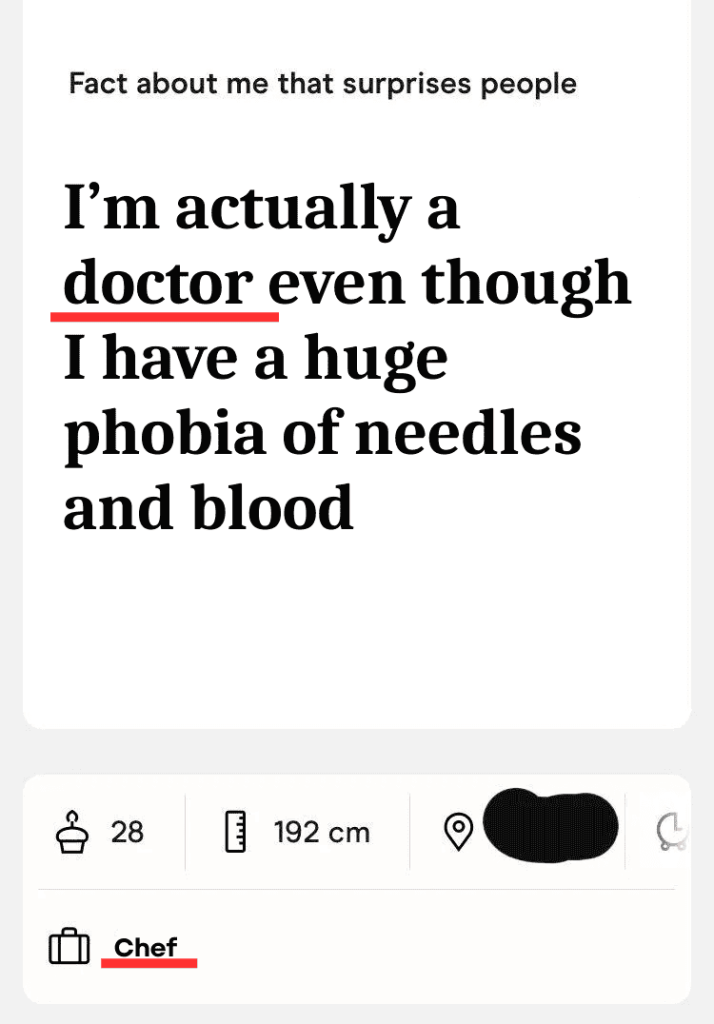
Their prompts are either generic or completely irrational, as opposed to real Hinge users, whose replies are filled with personality and carefully thought out.
For instance, if we take the “Together, we could” prompt, this is how a fake vs. real person would likely respond, more or less:
✅ Real: “…shoot a documentary exposing the real evil nature of koalas.”
❌ Fake: “…I am looking for fun.”
Bots make a lot of spelling mistakes, abuse emojis, put links, or say something hilariously confusing because they cannot mimic a natural, human response.
Also, catfishes sometimes act sexually to prey on desperate people. Not shaming! But Hinge is a serious app where people put their best foot forward.
4. They Are Aggressive Once You Establish Contact
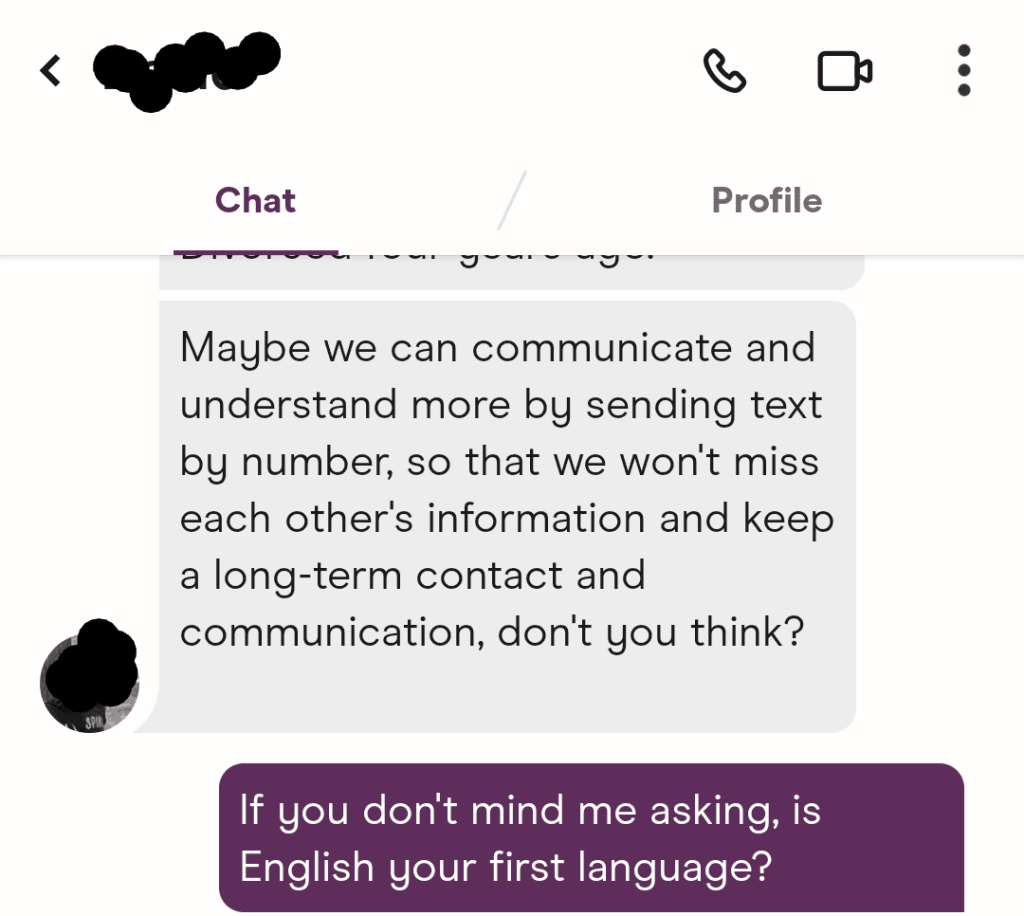
Catfishes on Hinge follow a very specific formula, which I like to call the “Fishing Rod”. It first starts with them being very romantic, very early on.
The Bait: They tell you they love you, that you’re their soulmate, and that they want to take the relationship to the next level.
The Catch: After the catfish is certain you’re falling for them, they start asking for personal favors.
It can be sensitive info (address, credit card, or even nudes) they will likely use to blackmail you. They get pushy or even aggressive if you don’t obey.
P.S. Catfishes on dating apps often ask to move to other social media due to privacy restrictions, saying they “don’t use Hinge often”.
5. Money Is the Main Topic With Them
Most Hinge catfishes are part of the game for financial gain, so they usually ask for money in the following ways: 👇
– Crypto investment ideas:
These fake Hinge users urge you to invest in very shady crypto deals, and constantly bring it up in a very enthusiastic, almost emergency-like tone.
– The financial aid sob story:
They start telling you about how they have bills to pay: groceries, rent, or even faking an illness so that you send money out of empathy.
– Elaborate stories:
Some create long stories in which your money is repeatedly needed. E.g., a “soldier” who’s stuck overseas and needs your help to make it back home. Just search up the Danish Deception, and you’ll know what I’m talking about!
These are the recurring ploys I usually encounter, but there are more, like Hinge catfishes straight-up asking for gifts.
6. The Catfish’s Life Stories Are Inconsistent
First and foremost, the Hinge catfish refuses to meet up. They either find excuses or flat-out say no because they’re not who they claim to be.
First it’s work, then their car breaks – this pattern never ends because they’re doing it deliberately.
Watch out for inconsistencies: Catfishes tell a lot of lies, which makes them prone to slipping up sooner or later about life details like:
- Location
- Profession
- Background
- Looks (they may look younger/older)
Picture this: They said they have a peanut allergy, but then send you a photo while eating a Reese’s Cup. Keep notes of plot holes like this one.
Always ask them why, what, how, when, and where follow-up questions.
Are They a Partial or Full Hinge Catfish?
Not every catfish fabricates their whole identity – some lie about certain things to hook you in, while at the same time preserving their anonymity.
Full Catfishes are lying about everything: their appearance, identity, and intentions.
Partial Catfishes usually falsify certain things, usually slight appearance or professional alterations to make themselves appear more impressive.
🛡️ What to do if you encounter a catfish on Hinge?
First, see if they check out any of the 6 signs above. Next, search their photo using ProFaceFinder – catfish photos trigger results with different names.
Regularly check online forums. E.g., if your match is from Toronto, look up “Toronto Hinge Catfish” on Reddit or the “Are We Dating the Same Guy?” group.
Block & report them, obviously. Screenshot everything; don’t send money or reveal private info because they might be a scammer or dangerous criminal.
 EN
EN  DE
DE  ES
ES  PT
PT  RU
RU  JA
JA  ZH
ZH
Leave a Reply