

Alguma vez viu um programa da MTV Peixe-gato episódio e pensamento, "Espera... isso também me está a acontecer a mim"? De repente, o textos encantadores, perfeitos fotos, e mensagens de sedução não se parece tanto com um sonho e mais com uma armadilha.
Carregar a sua fotografia para ProFaceFinder - verifica aplicações de encontros, redes sociais e até sites de burlas para detetar imagens roubadas ou falsas.
Sinaliza perfis gerados por IA ou suspeitos
Dá-lhe paz de espírito em minutos
Online dating is exciting…and tricky. You might be texting someone for days, yet they might be lying about who they are.
🎉Good news, catfishes usually follow a pattern. After falling into a rabbit hole, I gathered 8 signs to help you recognize when an online date or friend is a catfish.
1. They Can’t Show You Simple, Spontaneous Proof
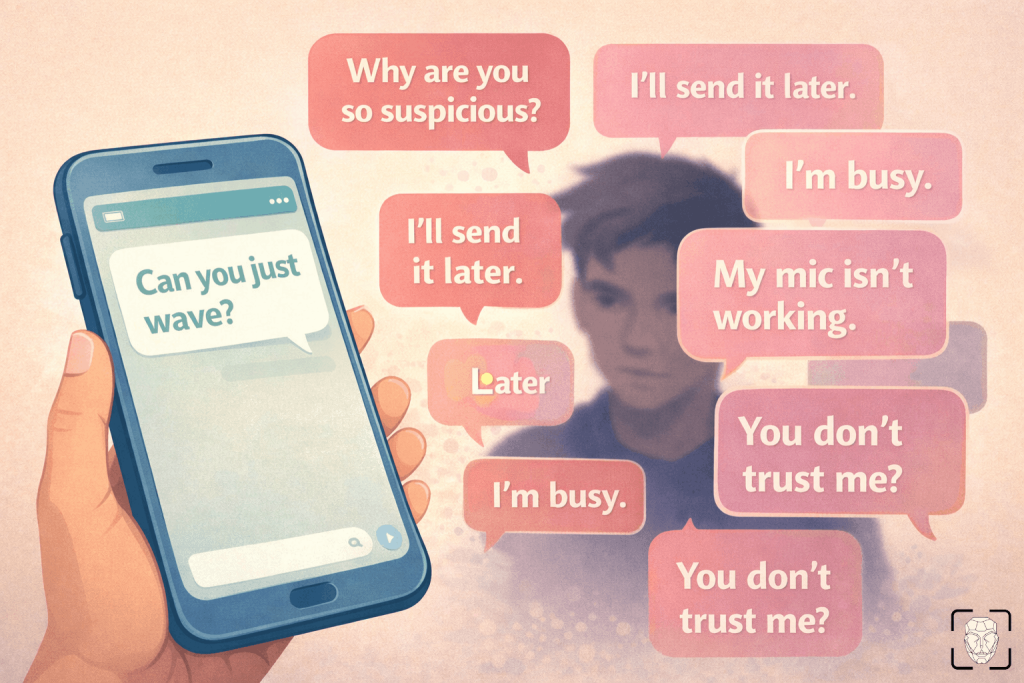
Peixes-gato struggle to show they exist in real time, so they recycle the same content when talking to their target. Ask them to perform these simple tasks:
- “Send a live, unplanned photo (not filtered, not staged).”
- “Record a voice note saying your name.”
- “Take a photo with current surroundings (e.g., window view or desk).”
- “Do a simple action on request (hold up two fingers, smile, wave, etc.).”
The catfish will likely refuse to send any candid photo, video, or voice message, and that’s because they are lying about their identity and appearance.
Instead, they repeat excuses: (“later”, “camera’s broken”, or “bad connection”). It’s common for them to get defensive, guilt-trip you, or change the subject.
‼️ Watch out for this trick catfishes do:
Your person might give you what you asked for after a delay. That means they’ve faked the photo/video or got more from the person they’re pretending to be.
2. Catfishes Share Overly Personal Stories
Catfishes share personal trauma or loneliness very early on to create a fast emotional attachment before facts, making you feel responsible or invested.
More often than not, they ask for financial aid by telling you rent’s due or that they have medical bills to pay.
- “I’ve never told anyone this.”
- “You’re the only one I talk to.”
Importante: Slow the emotional pace. Don’t jump into fixing or rescuing this person, and never send money.
3. An Escalation in Affection

Fast declarations of love are a catfish’s tactic to lower your guard and make you fall for them, which makes you more prone to fulfilling their wishes.
The catfish in question might tell you they love you and that they want to take your relationship to the next level…yep, marriage.
Remember that relationships develop over time. Don’t get pressured into trusting someone before it’s earned.
4. They Pressure You to Switch Apps
If you met the catfish on a dating site, they’ll ask you to switch to social media to remove safety checks.
They do this because features like verificação, reportinge monitoring make it difficult to keep their real identity hidden as they try to scam people.
But there’s an advantage to all of this: you get the chance to check the catfish’s social media profiles for any red flags!
- Low-quality selfies taken and posted in the same year.
- An empty profile with no friends, comments, tags, or interest pages.
- Zero photos containing hints confirming where they live, etc.
5. Catfishes Purposely Stay Out of Reach
Notice how they’re “almost” available? They’re done with work or coming to see you, but something always happens.
One or two obstacles are fine, but if unavailability is a recurring pattern, the catfish could be avoiding real connections or meeting up with you IRL.
They say they’re abroad, deployed, in transit, or working a private job. Basically, constant well-timed excuses that make it impossible for you two to get close.
6. They Lie and Mirror You
You say you’re introverted or have trust issues; they are, too. There’s no friction or individuality because catfishes mirror their victims to fake a genuine connection.
Of course, they lie a lot about their background and personality to keep the facade going. Check for small but repeated inconsistencies:
- Different names on social media/apps,
- Contradictions about their job, hobbies, or location.
- “Forgetting” small details they tell you about their past/daily life.
Ask the catfish questions: E.g., if they told you they grew up in x place, periodically ask them something related to their hometown (memories or locations).
7. Catfishes Apply Pressure for Personal Info
Catfishes have an agenda (usually money), and when they understand they’re not getting anywhere, they start pressuring you or even getting aggressive.
They might ask for nus, bank info, or cash. These are taboo even for couples, let alone with someone you’ve never met.
⚠️ Send nothing personal until you’ve met and built real trust because personal data turns into blackmail. Cut them off if they pressure you.
8. The Person is Avoiding Talking About Their Past

A real person’s past shows up naturally in conversation – messy, detailed, and imperfect, but peixes-gato avoid it.
They have falsified their identity from top to bottom, so they don’t have a past to share. They could lie, sure, but talking about it even a little bit might expose them.
You’ll notice vague stories, short answers, and missing names, places, or timelines. A catfish’s history feels empty because it’s hard to fake a life consistently.
Ask about high school, childhood hobbies, or old friends. Real stories include details, fake ones don’t.
How to Turn the Catfish Signs Into Actual Proof?
Scammers build emotional closeness before acting needy. That bond makes you defend them, even when the signs are obvious. This is how to keep yourself safe:
🔎 Do a reverse image search with ProFaceFinder for better results on social media and sites de encontros. Prove their innocence or guilt by seeing if any image is reused, stolen, or tied to other identities.
🚶 Step back and stop sharing personal info: if this were happening to a friend, would you say “follow your heart” or warn them?
✍️ Write down what they tell you about themselves to detect inconsistencies. You don’t know much, right? I thought so.
❓ Ask yourself: have your real-life relationships ever delayed meeting, avoided selfies, or dodged simple verification?
📵 Don’t text for 24 hours. Notice their reaction. Genuine concern looks different from irritation of a disrupted script.
📖 Read real catfish stories. It’ll help you recognize patterns like instant connection, constant excuses, and more before it’s too late.
🚩 Report and block the catfish as soon as they start filling any of the criteria in this article, especially if they’re threatening you.
Lean on friends, communities, or professionals for emotional support. You learned and grew. Some people are real, some aren’t.

 PT
PT  EN
EN  DE
DE  ES
ES  RU
RU  JA
JA  ZH
ZH
Deixe um comentário